
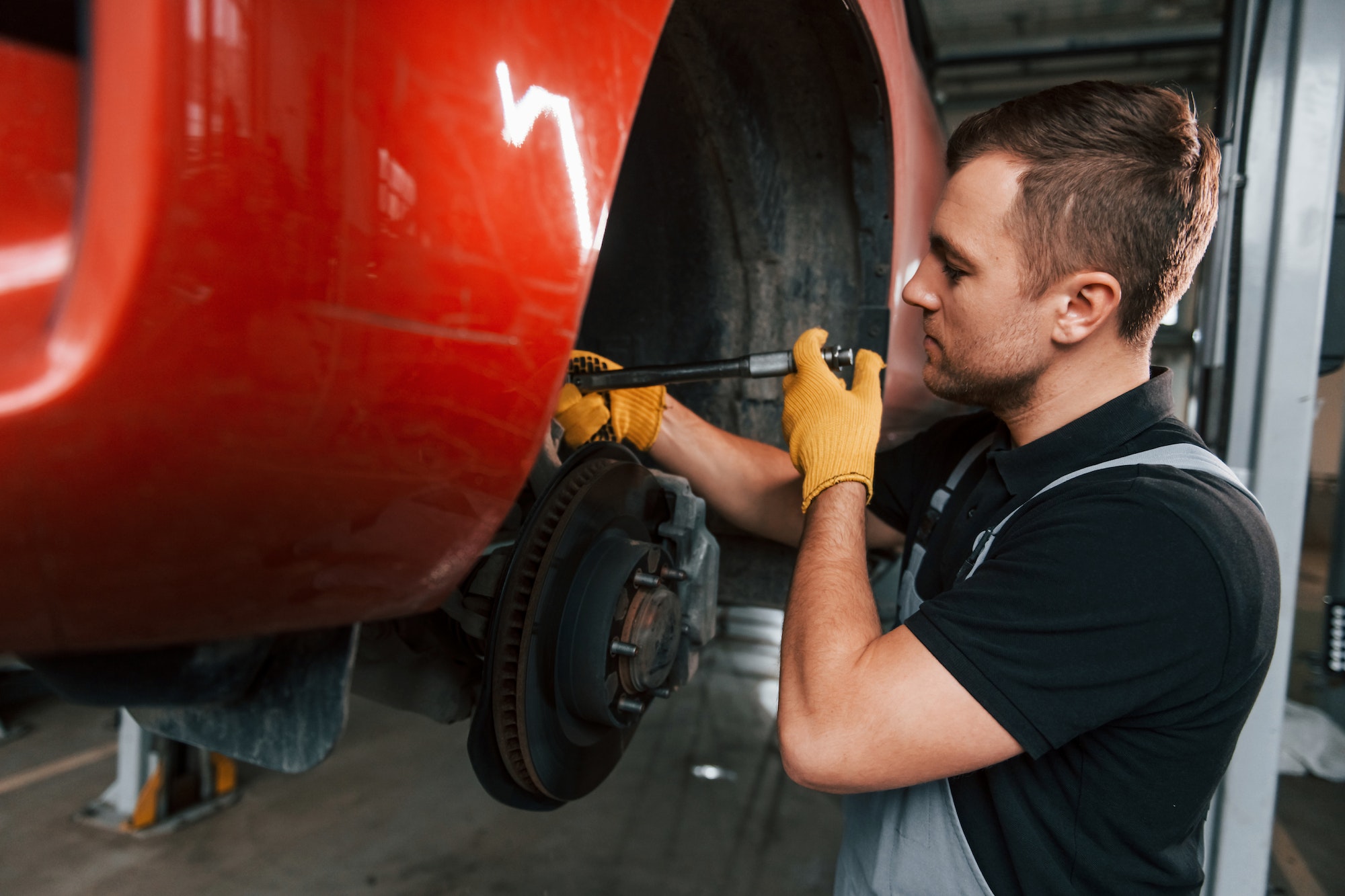
If your brakes are squeaking, grinding, vibrating, or feeling soft, your vehicle may need brake service soon. Some symptoms mean you still have time. Others mean you should schedule an inspection immediately.
This guide explains:
• What different brake noises mean
• When brake pads need replacement
• Whether it’s safe to keep driving
• What causes shaking or pulling when braking
• What to do next
If something felt off when you pressed the brake pedal, you’re right to pay attention. If any of that sounds familiar, you’re in the right place.
Let’s walk through what’s actually happening, what’s normal, what’s not, and what you should do next.
The Moment It Starts: “Is This Normal… or a Big Problem?”
Brake issues almost never announce themselves politely.
They start small. A noise. A feeling. Something that makes you turn the radio down and pay attention.
Here are the most common signs your brakes may be nearing replacement.
High-Pitched Squealing or Screeching
This is often the first warning. Many brake pads are designed to squeal when they’re worn down as a built-in alert.
It’s easy to ignore because you hear other cars doing it too. But that sound usually means your pads are running low and time is limited.
Harsh Grinding Noises
Grinding is different. It’s deeper, rougher, and usually means the brake pads are already worn through.
At this point, metal is contacting metal, which can damage your rotors quickly and raise repair costs fast.
Steering Wheel Vibration When Braking
If your steering wheel shakes or pulses when you slow down, warped rotors are often the culprit.
This can happen from heat buildup, heavy braking, or worn components that are no longer wearing evenly.
Spongy or Soft Brake Pedal
This one tends to trigger real fear.
A soft brake pedal can mean air in the brake lines, low brake fluid, or hydraulic issues. It does not mean your brakes will instantly fail, but it does mean they are not working as designed.
Car Pulling to One Side
If your car drifts left or right while braking, it could be uneven pad wear, a sticking caliper, or fluid issues.
It’s a safety concern and should be checked sooner rather than later.
Brake Warning Light
When this light comes on, your vehicle is asking for attention.
Sometimes it’s as simple as low brake fluid. Sometimes it points to a deeper issue. Either way, it’s not something to ignore.
The Questions Everyone Asks Next (Even If They Don’t Say Them Out Loud)
Once the symptoms show up, the mental spiral starts.
“Can I keep driving like this?”
“Is this dangerous or just annoying?”
“Am I about to cause a bigger, more expensive problem?”
“What if my brakes give out?”
These are fair questions. And the answer is not always the same for everyone.
Some brake noises mean you have time to plan.
Others mean you should stop pushing your luck.
What matters most is knowing which situation you’re in.
So… When Should You Actually Replace Your Brakes?
Brake pads typically last anywhere from 30,000 to 70,000 miles, depending on driving habits, vehicle type, and conditions.
But mileage alone is not the best indicator.
You should seriously consider brake replacement if:
- The squealing has become constant, not occasional
- You hear grinding, even briefly
- Braking feels noticeably different than it used to
- The car shakes or pulls when slowing down
- The warning light is on and stays on
Waiting too long can turn a simple pad replacement into a rotor, caliper, or brake line repair. That is where costs climb and stress spikes.
What to Do Next (Without Making Things Worse)
Here’s the part most people appreciate hearing.
You do not need to panic.
You do not need to assume the worst.
And you do not need to guess.
The smartest next step is a professional brake inspection. A proper inspection tells you:
- How much life your brake pads actually have left
- Whether your rotors are still in good shape
- If any components are wearing unevenly
- Whether it’s safe to keep driving short-term
At Sterling Auto Care, brake inspections are about clarity, not pressure.
We explain what we see.
We show you what’s worn and what’s not.
And we help you decide what makes sense based on safety, timing, and budget.
Why Drivers Trust Sterling Auto Care When Brake Issues Pop Up
Brake problems create anxiety because the stakes feel high. Your safety matters.
That’s why our approach is simple.
We listen first.
We inspect thoroughly.
We explain clearly.
We never rush you into unnecessary repairs.
Whether your brakes need immediate attention or just a plan for the near future, we’ve got your back.
If Something Feels Off, Trust That Instinct
Cars don’t always break loudly.
Sometimes they whisper before they shout.
If you’ve noticed a sound, a vibration, or a feeling that made you search this question, that instinct is worth respecting.
Schedule a brake inspection with Sterling Auto Care and get real answers, not guesses.
Your peace of mind is worth it.